
Tropical forests in the south, steppe in the north, the Tibetan Plateau in the west and some of the world’s most modern cities in the east… In our documentary we tried to show China’s face beyond the tourist crowds: Zhangjiajie’s rock pillars reaching into the clouds, Guilin’s mirror-like rivers, centuries-old villages and the endless silence of Tibet. This guide first covers the natural landscapes from the video, then the practical matters every first-time visitor must know. China can be challenging if you go unprepared, but unforgettable if you plan well.
Zhangjiajie: A forest of stone pillars
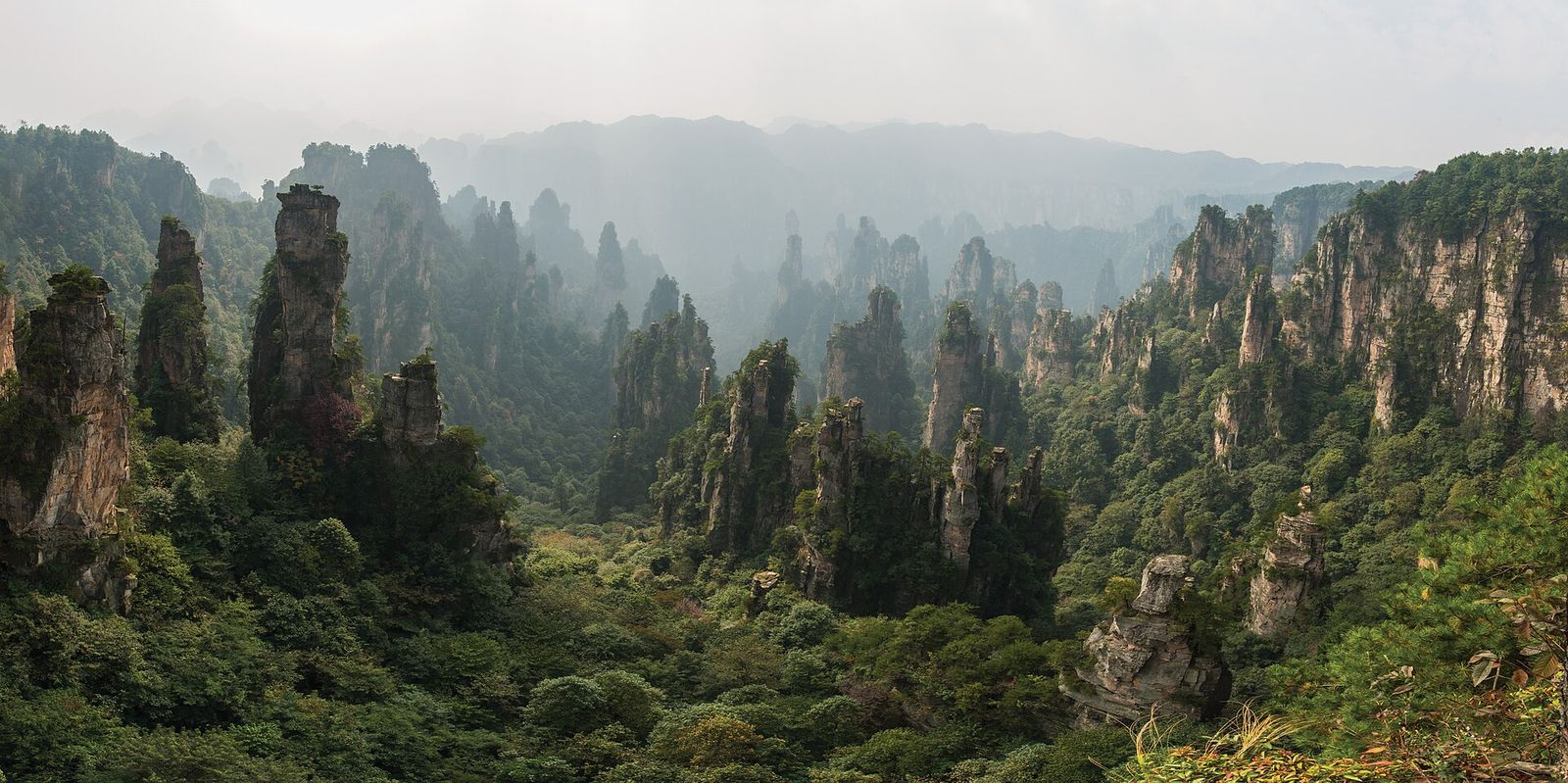
Zhangjiajie National Forest Park in Hunan Province is part of the Wulingyuan area, which is on the UNESCO World Heritage List. Sandstone pillars hundreds of meters tall rise through the clouds on misty days, a sight that reminds many people of a certain sci-fi movie. Inside the park are hiking trails, cable cars and an elevator built onto a cliff face. The area is huge, so allow at least two days.
Nearby Tianmen Mountain, with its long cable car, the “Heaven’s Gate” arch carved into the rock and glass walkways on the cliff edge, is another icon of the region.
Guilin and Yangshuo: Karst peaks and rivers
Guilin and Yangshuo in the Guangxi region have the sugarloaf karst peaks and mirror-like rivers that inspired classical Chinese painting. A boat or bamboo raft trip on the Li River from Guilin to Yangshuo is the region’s classic experience. Cycling among the rice fields and villages around Yangshuo is also a joy.
The region’s Longji rice terraces, wrapping the mountainsides in steps, are among the most striking shots in the video.
Tibet: The roof of the world
Tibet, with its plateau at an extremely high average altitude, is known as “the roof of the world.” The Potala Palace in Lhasa, monasteries and sacred lakes are the region’s best-known sights. Travel to Tibet requires special permits on top of a Chinese visa and must usually be arranged through an authorized agency. Because of the risk of altitude sickness, it’s important to spend your first days resting and to talk to your doctor about your health beforehand.
The classics for first-timers
Although our video focuses on the lesser-known China, these places are hard to skip on a first visit:
- Beijing: The Forbidden City, Tiananmen Square, the Temple of Heaven and sections of the Great Wall near the city (sections like Mutianyu are less crowded).
- Xi’an: The starting point of the Silk Road and the Terracotta Army, made up of thousands of figures.
- Shanghai: The historic buildings along the Bund and the Pudong skyscrapers across the river.
To compare guided tours and Great Wall trips: tours and things to do in China.
Practical info: Read this before you go
Visas
China’s visa policy has changed for many countries in recent years, with visa-free entry or visa-free transit now available to a growing list of nationalities. Check the current rules for your passport with China’s official missions.
The internet
In China, access to Google, YouTube, WhatsApp, Instagram and many other foreign apps is blocked. This directly affects your maps, messaging and email, so planning your connection before you leave is critical. International roaming and some international eSIMs may be affected differently by these restrictions; research your options in advance: eSIM options for China.
Payments
Most everyday payments in China are made with mobile apps (Alipay, WeChat Pay). These apps now let you link some foreign cards; set them up and test them before you go. Carrying some cash is also useful.
Language
English isn’t widely spoken outside the big cities. Download translation apps for offline use, and carry your hotel’s address written in Chinese.
Food
Chinese cuisine varies enormously by region: Sichuan’s fiery dishes, Cantonese dim sum, and the dumplings and noodles of the north. Since most menus are in Chinese, picture menus and translation apps are a huge help. Pork is very common in Chinese cooking; if you don’t eat it, a note written in Chinese makes things easier.
Getting around
China’s high-speed rail network is the largest in the world and links the major cities. You need to register with your passport to buy train tickets. Domestic flights are common for long distances. There are direct and connecting flights to cities like Beijing, Shanghai and Guangzhou from around the world: flights to China.
Where to stay
In Zhangjiajie, the Wulingyuan area near the park entrance makes a good base; in the Guilin area, quieter and more scenic Yangshuo. In big cities, hotels near a metro line save time. Remember that hotels must be licensed to host foreign guests: hotels in China.
When to go
China is so big that the climate varies from region to region. In general, spring (April–May) and fall (September–October) are the best times. Domestic travel is extremely busy during the national holiday in early October and around Chinese New Year, so avoid those dates. Zhangjiajie and Guilin are rainy and humid in summer.
Final word
China is too big to see in a single trip. Watch our documentary, pick the landscape that appeals to you most, then prepare your journey with the practical tips in this guide. A well-prepared trip to China can be one of the most extraordinary experiences of your life.
Unusual facts
- China spans five geographical time zones, yet the whole country uses a single time zone.
- China has the longest high-speed rail network in the world.
- The rock pillars of Zhangjiajie became famous for inspiring the “floating mountains” in a hit science-fiction movie.
- The Great Wall isn’t a single wall but a system of many walls built in different eras.
- Most everyday payments in China are made with mobile apps; cash and foreign cards aren’t accepted everywhere.
Things to watch out for & tourist traps
- Before you go, install the mobile payment apps and link your foreign card; in some places there may be no other way to pay.
- Access to many foreign apps and websites is restricted, so plan your communication and maps in advance.
- During national holidays (especially early October and Spring Festival), trains and tourist sites are extremely crowded.
- Friendly strangers inviting you to a “tea ceremony” or an “art exhibition” in tourist areas are a classic scam.
- Train tickets and some museum tickets are tied to your passport, so carry it with you.
Frequently asked questions
Do I need a visa for China?
Entry rules have changed several times in recent years, with visa-free entry or visa-free transit now available for many nationalities. Check the current rules for your passport with China’s official consular sources and your own government’s travel advice.
How do I get online in China?
International roaming and some international eSIMs may not be affected by certain restrictions; research your options before you go.
Can I travel freely to Tibet?
No. Tibet requires special permits in addition to a Chinese visa, and travel is generally arranged through a registered agency.